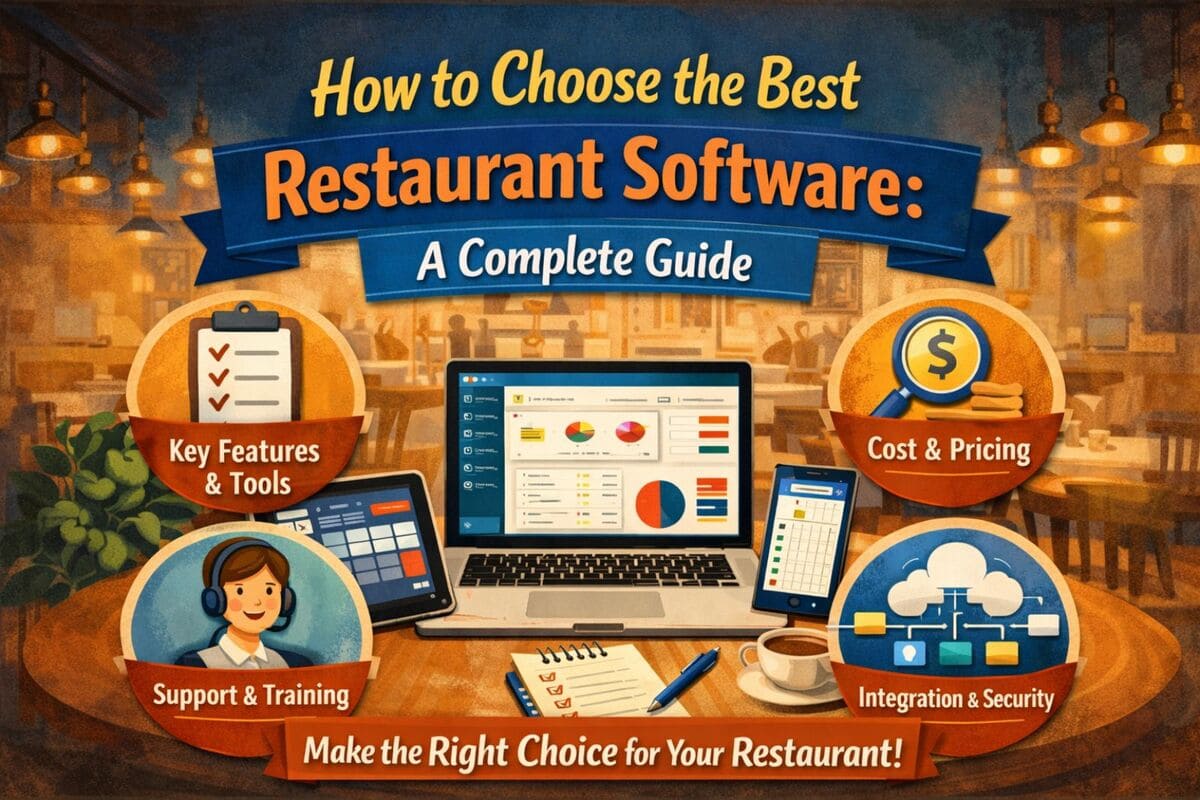
How to Choose the Best Restaurant Software: A Complete Guide
Running a restaurant today is about more than great food and service—it’s also about using the right technology. From managing orders and inventory to tracking sales and improving customer experience, restaurant software plays a critical role in daily operations.
But with so many options available, how do you choose the best restaurant software for your business?
This guide will walk you through the key factors to consider so you can make a smart, future-proof decision.
- Understand Your Restaurant’s Needs
Before comparing software providers, start by clearly defining your requirements.
Ask yourself:
- Do you run a quick-service restaurant (QSR), café, fine-dining restaurant, or cloud kitchen?
- Do you need dine-in, takeaway, delivery, or all three?
- How many outlets do you manage—single or multi-location?
- Do you need basic billing, or advanced features like CRM and analytics?
Choosing software without understanding your operational needs often leads to paying for features you don’t use—or missing ones you need.
- Look for Core Must-Have Features
The best restaurant software should cover essential operations smoothly. Make sure it includes:
✔ Point of Sale (POS)
- Fast and easy billing
- Table management
- Split bills and multiple payment options
✔ Inventory Management
- Real-time stock tracking
- Low-stock alerts
- Recipe-level inventory deduction
✔ Order Management
- Dine-in, takeaway, and online orders
- Kitchen Display System (KDS) integration
- Reduced order errors
✔ Reporting & Analytics
- Sales reports
- Profit and loss tracking
- Best-selling items and peak hours
These features form the backbone of efficient restaurant management.
- Cloud-Based vs On-Premise Software
Modern restaurants are increasingly choosing cloud-based software, and for good reason.
Cloud-based software benefits:
- Access data anytime, anywhere
- Automatic updates
- Lower upfront costs
- Easier scalability for new outlets
On-premise systems may work for some traditional setups, but cloud solutions offer more flexibility and long-term value.
- Ease of Use Is Critical
Your staff will use the software daily, so simplicity matters.
Choose software that:
- Has an intuitive interface
- Requires minimal training
- Works smoothly on tablets and touch screens
Complex systems slow down operations and increase staff frustration, especially during peak hours.
- Integration Capabilities
Your restaurant software should integrate seamlessly with other tools, such as:
- Online food delivery platforms
- Payment gateways
- Accounting software
- Loyalty and CRM systems
Good integrations reduce manual work, minimize errors, and save time.
- Scalability for Future Growth
Think beyond today. As your restaurant grows, your software should grow with you.
Check if the software supports:
- Multiple outlets
- Centralized reporting
- Menu and price control across locations
Switching software later can be expensive and disruptive, so choose a scalable solution from the start.
- Data Security and Reliability
Restaurant software handles sensitive data, including sales figures and customer information.
Ensure the provider offers:
- Secure data encryption
- Regular backups
- High uptime and reliable servers
Data loss or downtime can directly impact revenue and customer trust.
- Customer Support and Training
Even the best software needs support.
Look for:
- 24/7 customer support
- Multiple support channels (call, chat, email)
- Onboarding and training assistance
Responsive support can make a big difference during busy service hours.
- Pricing and Value for Money
Don’t choose software based on price alone.
Instead, evaluate:
- Monthly or annual subscription costs
- Hidden charges (setup, updates, support)
- Features included in each plan
The best restaurant software offers maximum value, not just the lowest price.
- Check Reviews and Request a Demo
Finally, do your research:
- Read customer reviews and testimonials
- Ask for a free demo or trial
- Test real-world scenarios before committing
Seeing the software in action helps you make a confident decision.
Conclusion
Choosing the best restaurant software is an investment in your restaurant’s efficiency, profitability, and growth. By understanding your needs, focusing on essential features, and selecting a scalable, user-friendly solution, you can streamline operations and deliver a better dining experience.
The right software doesn’t just manage your restaurant—it helps it thrive.